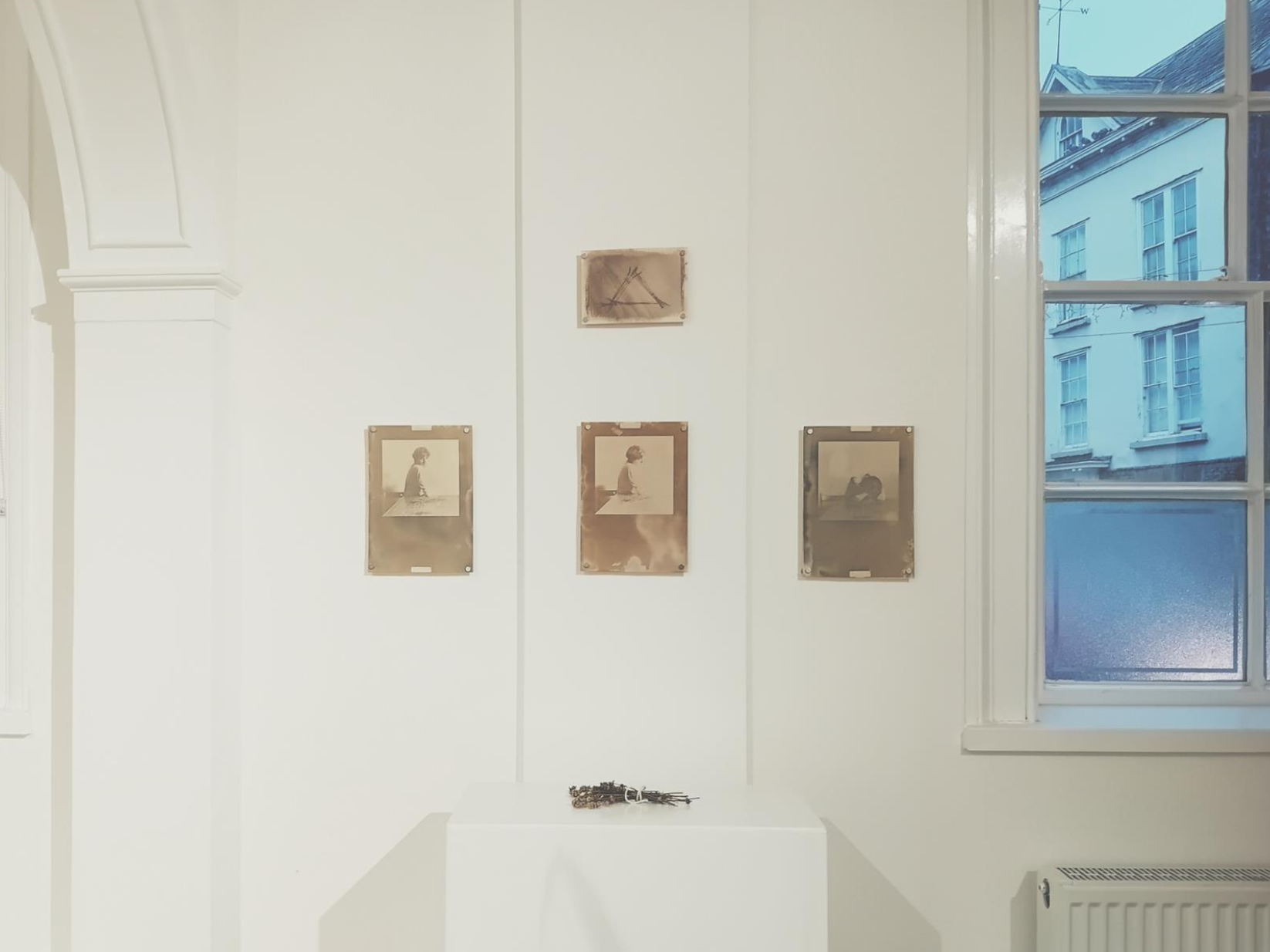
Shop the Collection
Welcome to the Print Lab.
This is a space to share new printed editions or stand alone images that are available to buy. As the prints are all handmade, often to order, the selection is small to allow for a streamlined process. Although I have named this space the “print lab”, which might conjure up visions of research assistants and a financed studio space, make no mistake. I make and prepare everything myself from my domestic space, proving that quality can exist beyond the confines of industry. When required, I also offer a bespoke framing service via local framing company, Old Shop Framing.
Here you can buy limited edition prints, learn about the process, and understand their purpose.
THE PRINTS
〰️
THE PRINTS 〰️
Plant-derived photographic prints. Photographs made with and by the plants they represent.
Here, the purchase of a print isn’t simply an act of ownership, but an expression of support for a growing movement in photography that looks back at its plant-derived origins to produce new visions of its future. Your investment in my work helps to sustain my research and continue what it means to work with the environment to produce new systems of collaborative engagement between humans and the non-human world. Each print is handmade in my home studio and toned using local material, meaning you’re not just investing in an independent, local artist, but the local ecosystem within which the art is made and derived.


THE PROCESS
〰️
THE PROCESS 〰️
Historical methods re-imagined for sustainable futures.
The prints here are made using the cyanotype process, a low-toxic and light sensitive chemistry which is painted onto paper, left to dry, and then exposed either to sunlight or UV lamps to create imprints of organic matter or photographs. The latter are made using acetates which, when laid over the surface of the dried solution, act like large negatives in the darkroom. An example of how this works can be seen in the image below, which was made in the textile department at Hereford College of Arts which is home to a large UV box, generally used for creating screen prints.
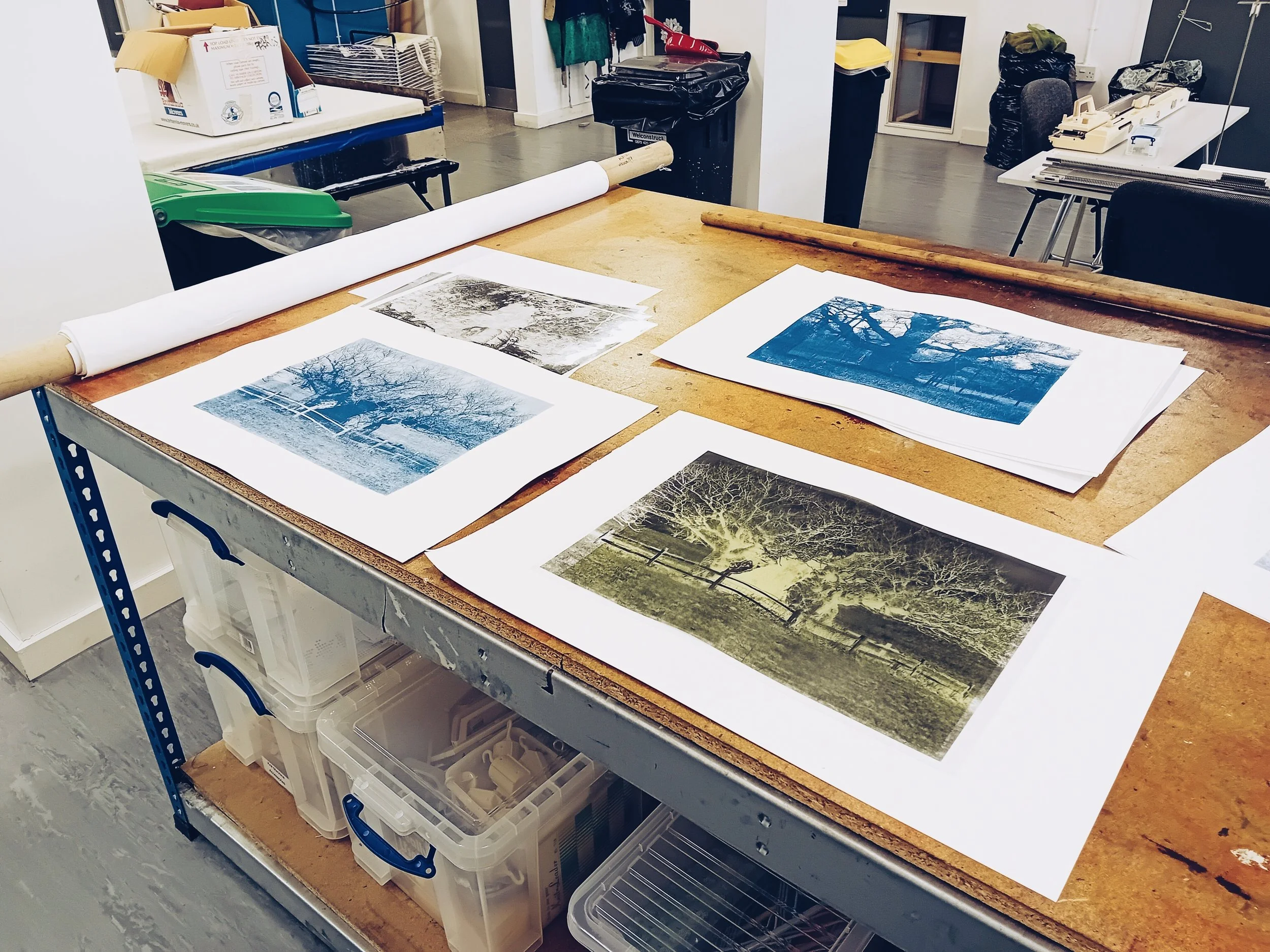
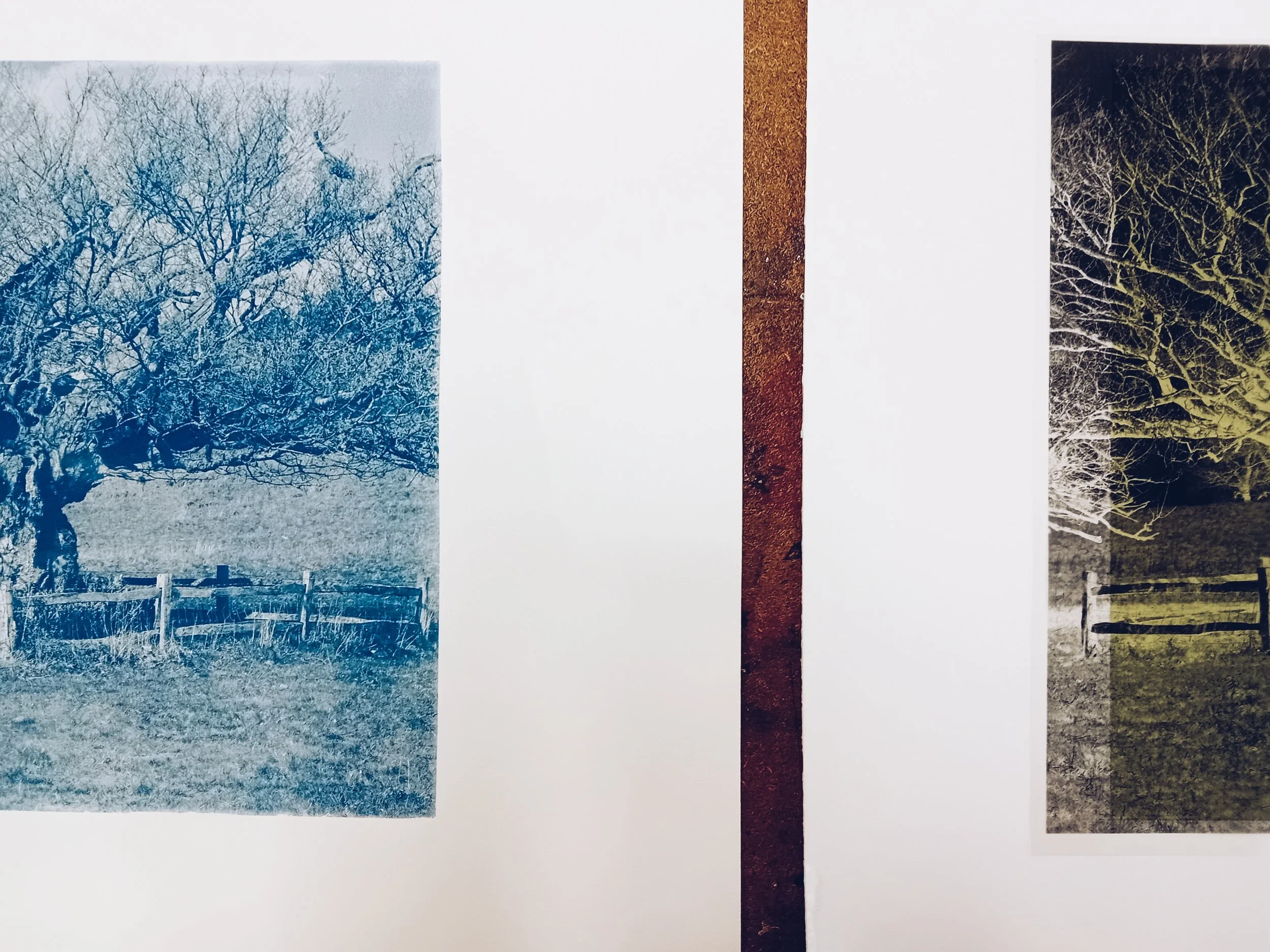
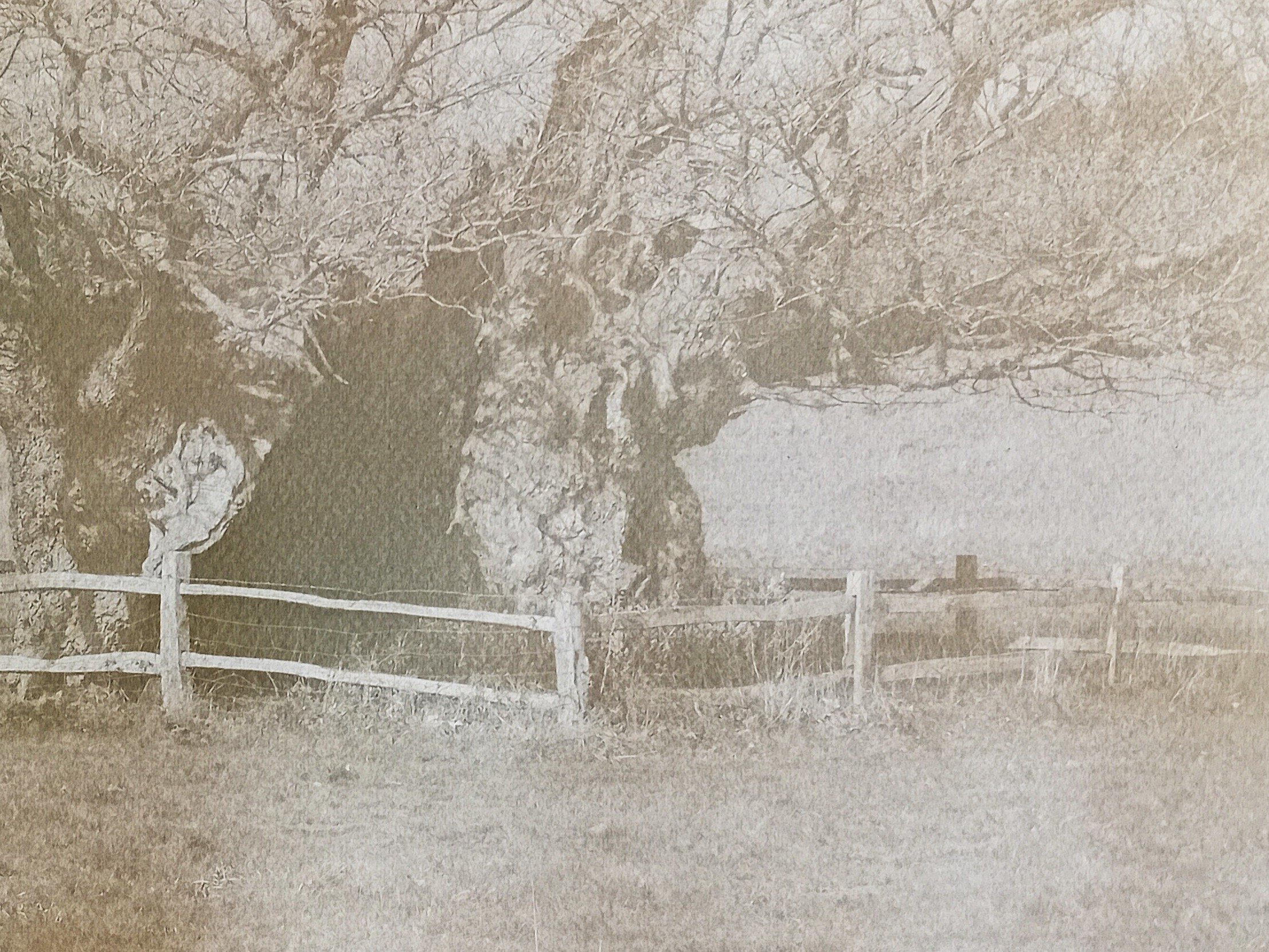
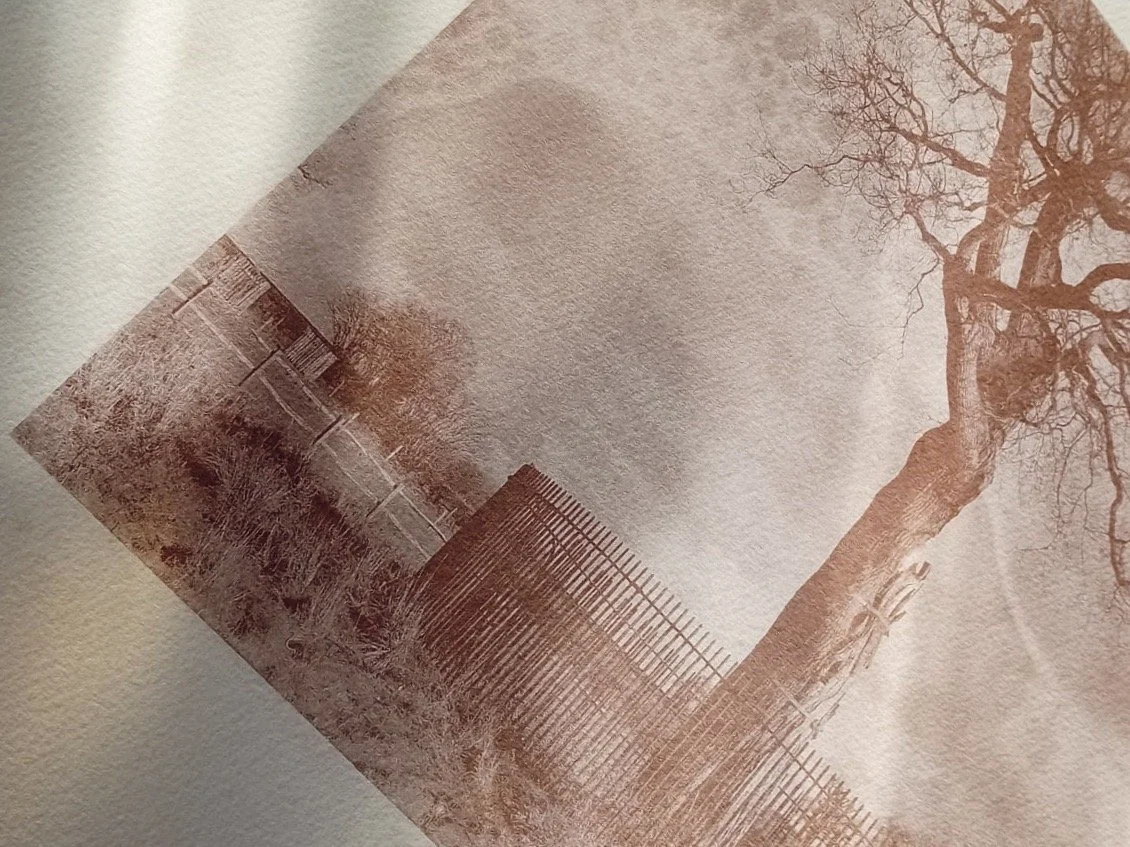
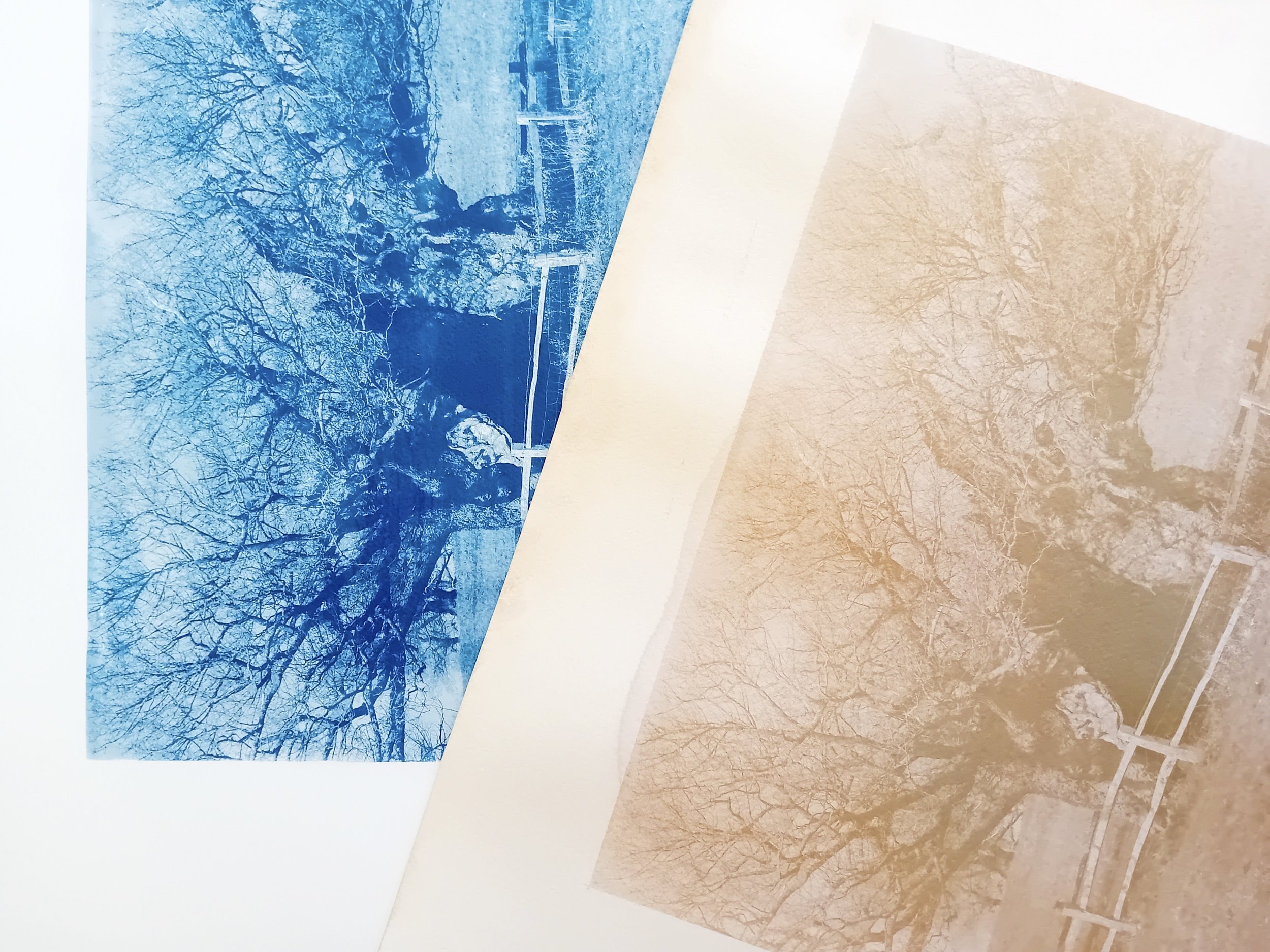
Above demonstrates the print making process of Arboreal Encounters. They begin as a series of blueprints, or cyanotypes, before being bleached and toned in oak bark tannin, which I make myself. On the left you can see a print of Queen Elizabeth I Oak, post-exposure, whereas on the right the pre-exposed cyanotype solution can be seen seeping through the acetate laid on top (a close-up of this can be seen below). After this, the prints are left to dry before they are bleached in a solution of bicarbonate of soda and water, removing its characteristic blue.
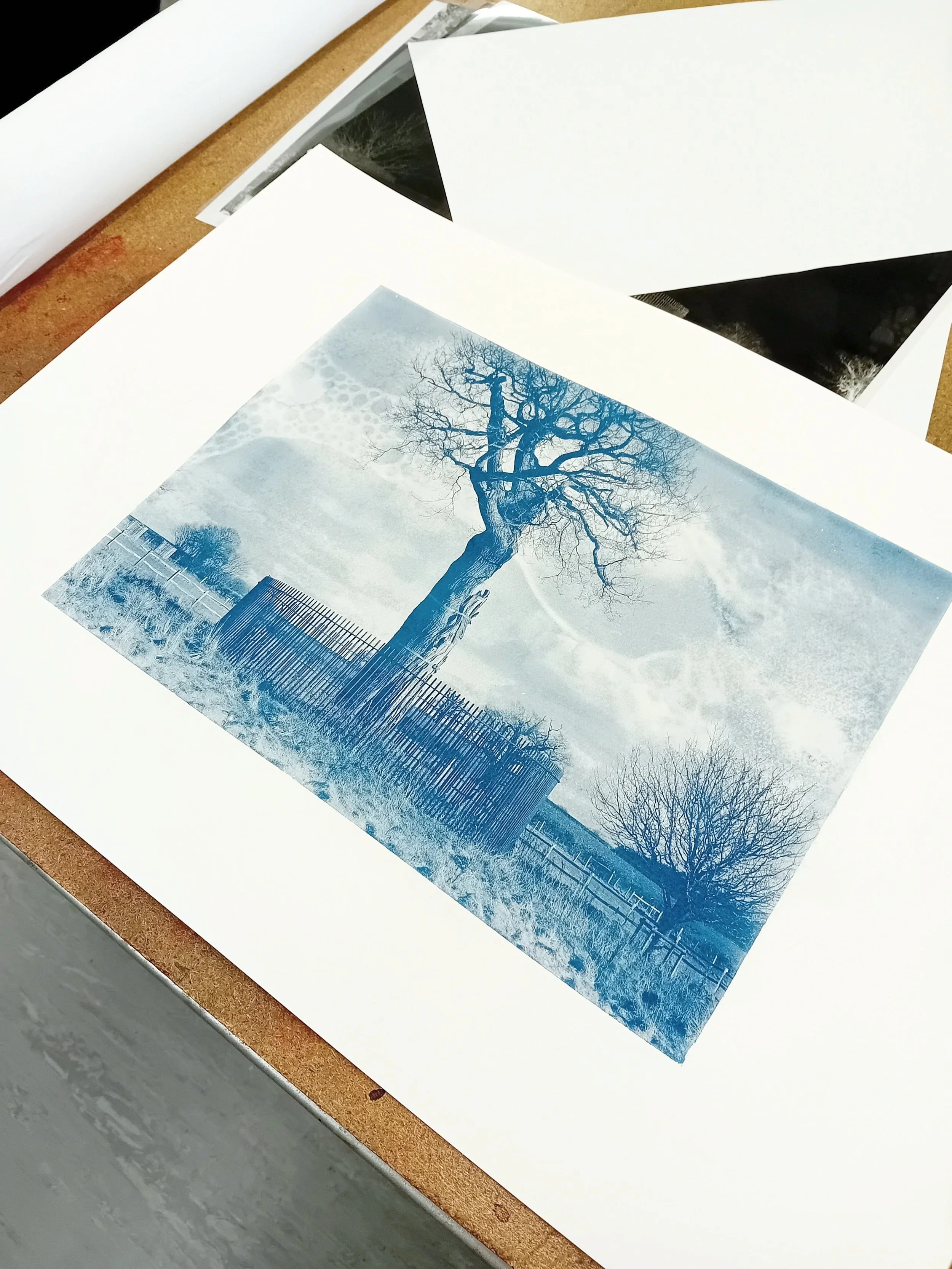
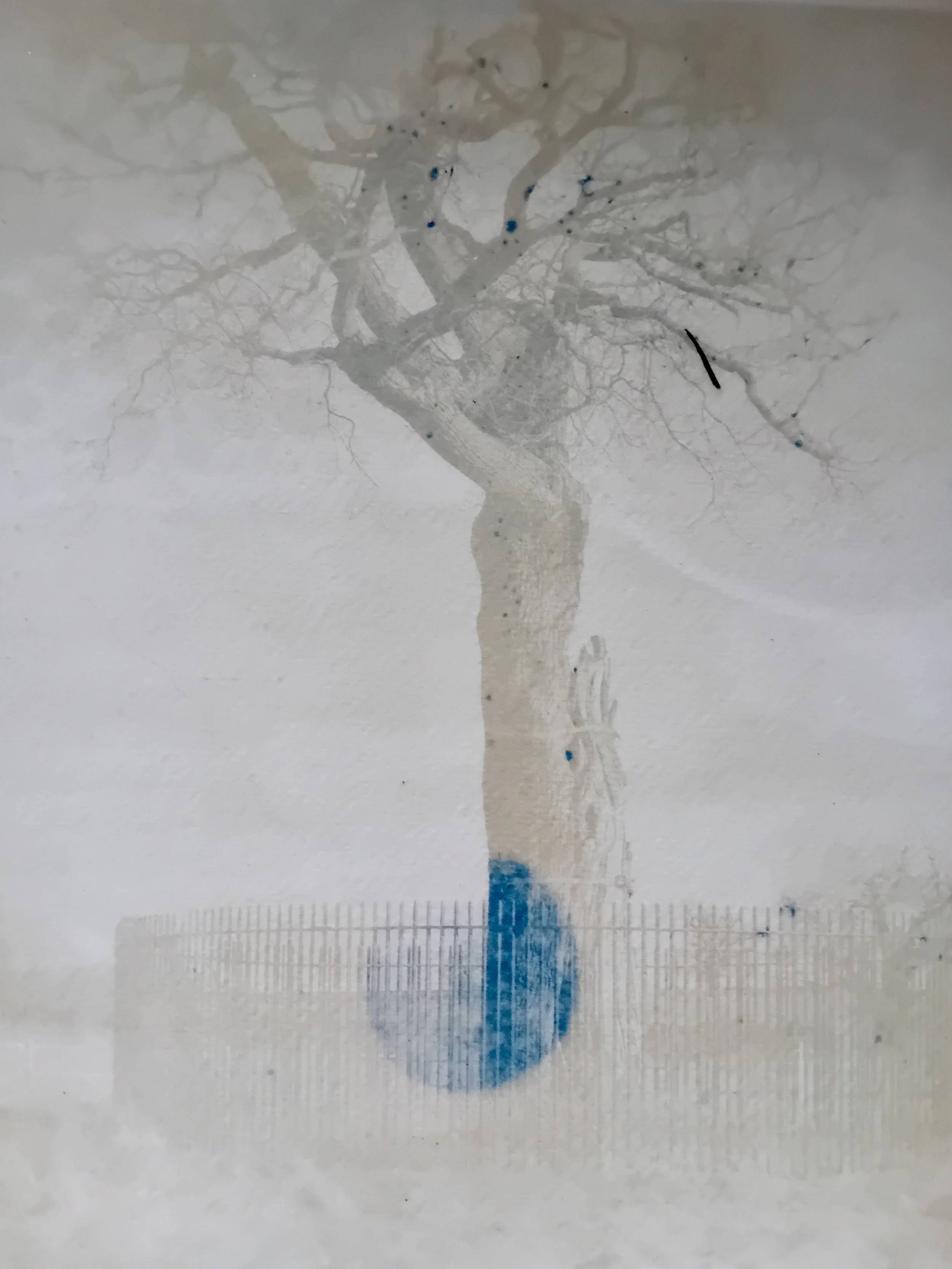
The bleaching process is complete once the prints turn a soft, pale yellow. However, sometimes this yields curious results. Below you can see the intriguing ways in which the bicarb solution reacts to the print. As you can see in the middle image which depicts Son of Royal Oak, the bleach has removed all of the blue except from these distinct circular patterns. Once fully bleached the prints are then washed again to remove all of the residue.
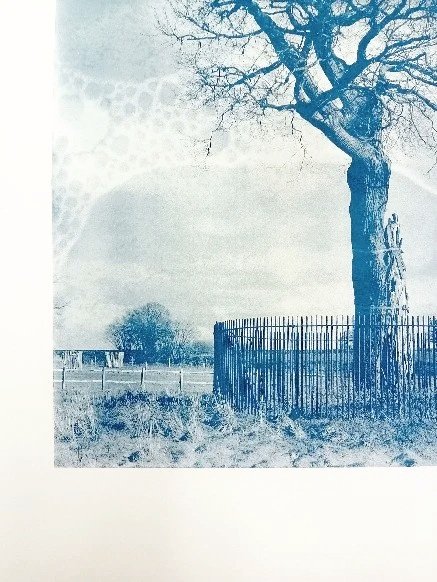
The final stage begins with extracting the oak tannin, which I acquire by using bark from my parent’s annual wood delivery. The bark is then chopped into small pieces, placed into a large bucket and submerged in boiling water. This is then steeped for 24 hours before being filtered to remove all solid material. It is then poured into trays. From this, the prints are placed into the solution face-down to be in direct contact with the image and remain in the liquid for up to eight hours, turning every so often to maintain clarity and consistency across the surface of the print. An example of the before and after process can be seen below.
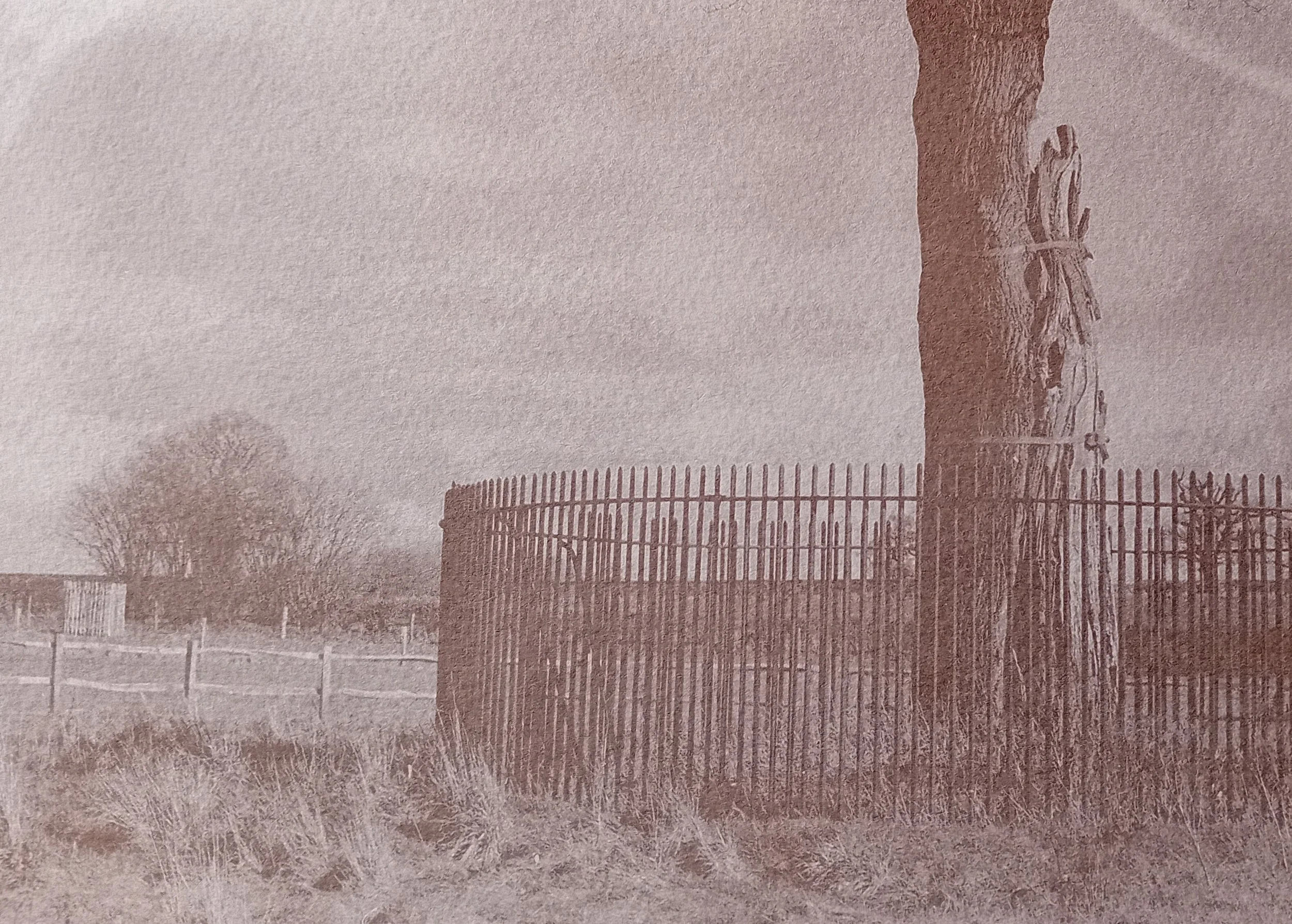
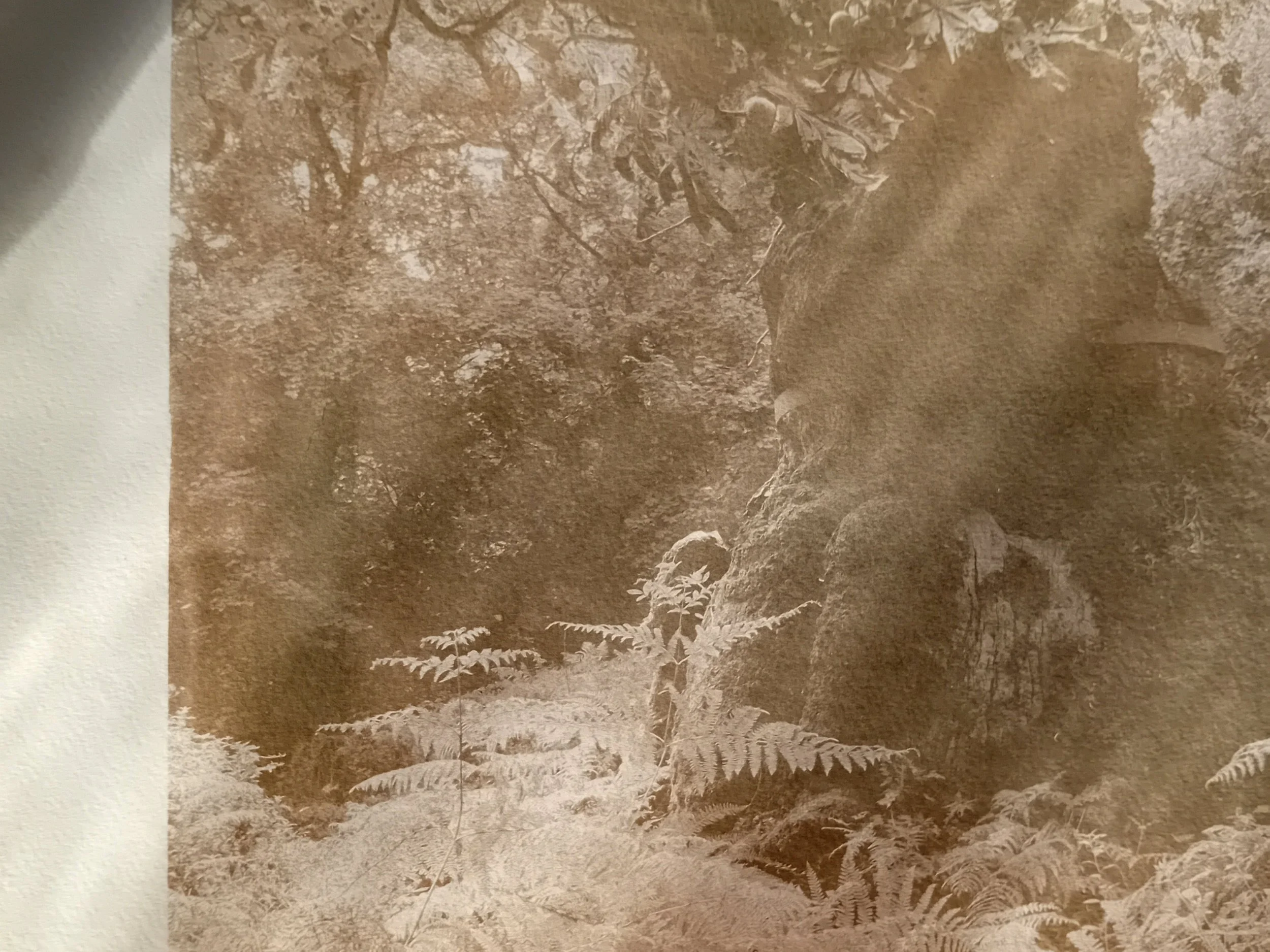
The effects of toning can bring a large variety of variation in hue, ranging from black and white and sepia, to more yellow or reddish undertones. The instability of this process, unencumbered by my own hand, is what gives them their unique quality. This is, in part, where the more scientific elements of the process fall away, as I do not wish to control the colour of the prints, but welcome their variety and randomness. By doing so the process could be said to be ‘materials-led’, insofar as the chemical variance is uncontrolled and left to its own devices. One last example, below, demonstrates more reddish undertones in contrast to the yellow above.
THE PURPOSE
〰️
THE PURPOSE 〰️
Co-authored images between humans & the natural world. A philosophical approach.
The prints for sale here are, as I’ve mentioned before, not your typical photographic prints. As originals, they are made by myself and the oak trees from whom I extracted the tannin. In the form of a toner, the dye from the tannins become naturally interwoven with the fibres of the print, meaning the images you come to own aren’t just of my own hand but contain the material presence of the trees that helped make them. This is, in its simplicity, the philosophy of co-authorship. A way of making with the natural world. Doing so, however, also translates into thinking. The prints are therefore a reminder and physical manifestation of the ways in which we are, as the mycologist Merlin Sheldrake puts it, entangled with other parts of the living world.
To think of photography as a light-based creative medium is to imagine both the poetic power of the discipline and its historical relationship with the vegetal world , which offers up fascinating potential for new ways of working with photography. As we move continuously deeper into the digital age of A.I. where images are instead created by computers, alternatives that focus on the analogue, material ways that we might remain rooted in the physical world feel almost radical. This is, in a way, a manifesto. An investment in creative and research practices that retain and seek out more tangible ways of being and of working. Much of which is rooted in community.
If you cannot afford a print but wish to invest in this philosophy by offering a donation which will contribute to my ongoing work, then you may do so by filling in the form to your right. Thank you.
Any Further Questions?
We'll review your message and get back to you as soon as we can.