




Epha J. Roe is an English contemporary artist, writer, researcher and educator specialising in creative engagements with plants and the wider natural world.
ABOUT EPHA’S WORK
Drawing on growing scientific and philosophical engagements with plant intelligence and its effects upon creative practice, Epha’s work explores the connections between humans and the natural world with a particular interest in the cultural history of individual plants or plant species. This interest in the natural world also extends into the theoretical discipline of Queer Ecology, a form of engagement with the natural world that challenges dominant narratives of nature that place heterosexuality and binary gender at its centre.

Self-portrait with a mature oak tree which features as the subject of my Perceiving Phytochrome images, Hergest Croft Gardens , Kington, UK.
PROJECT HIGHLIGHT:
Arboreal Encounters:
Heritage Oaks in the English Landscape
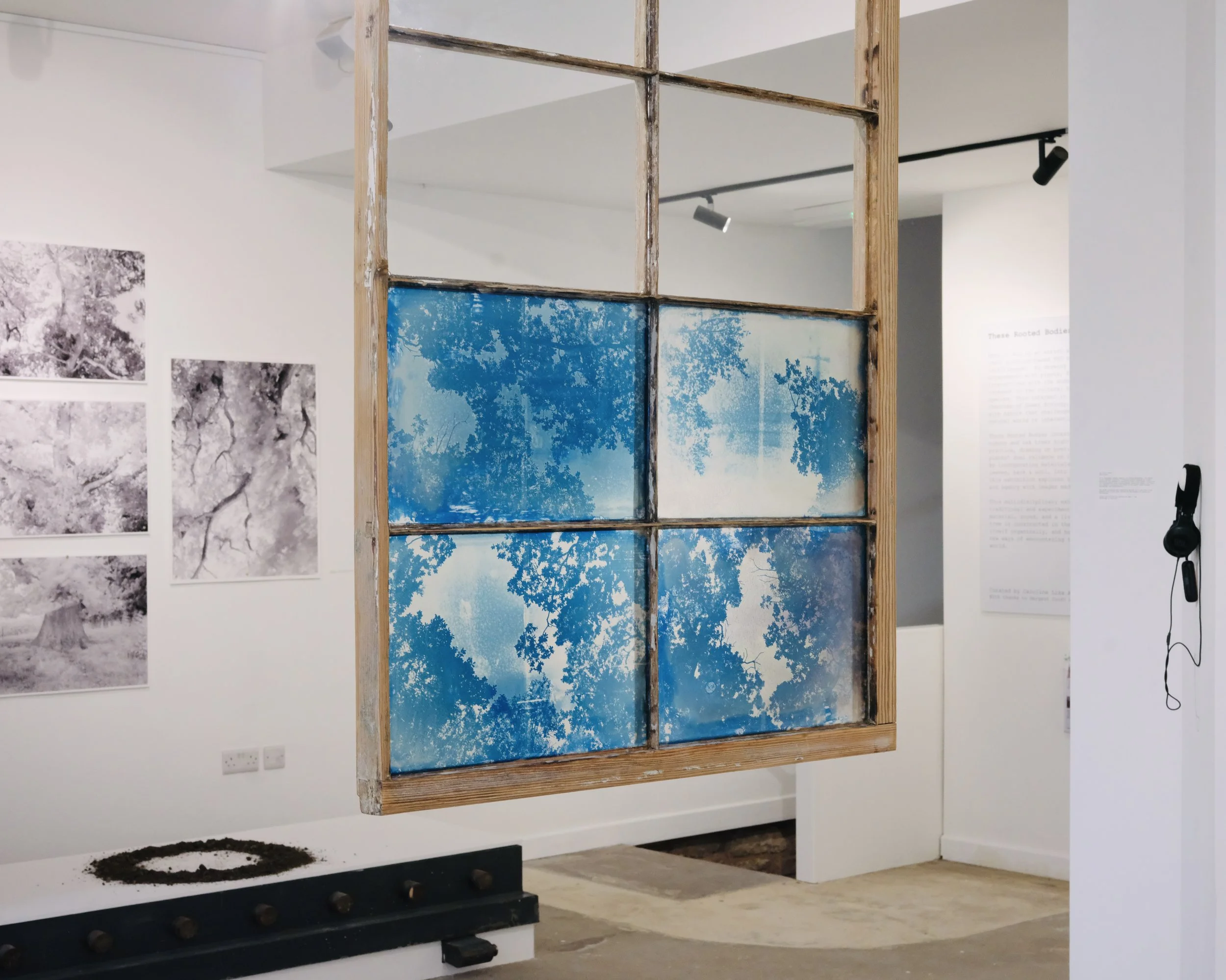
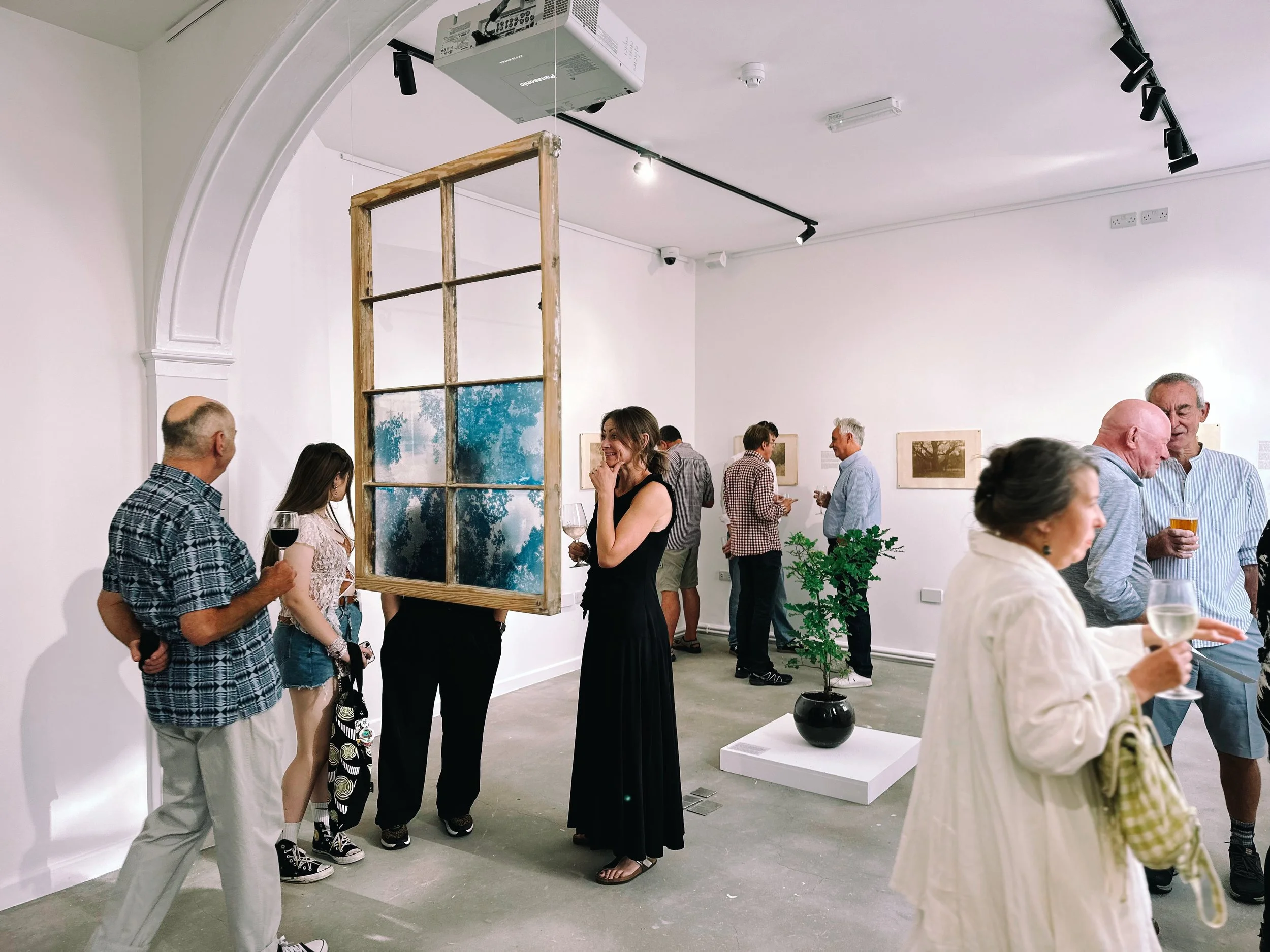
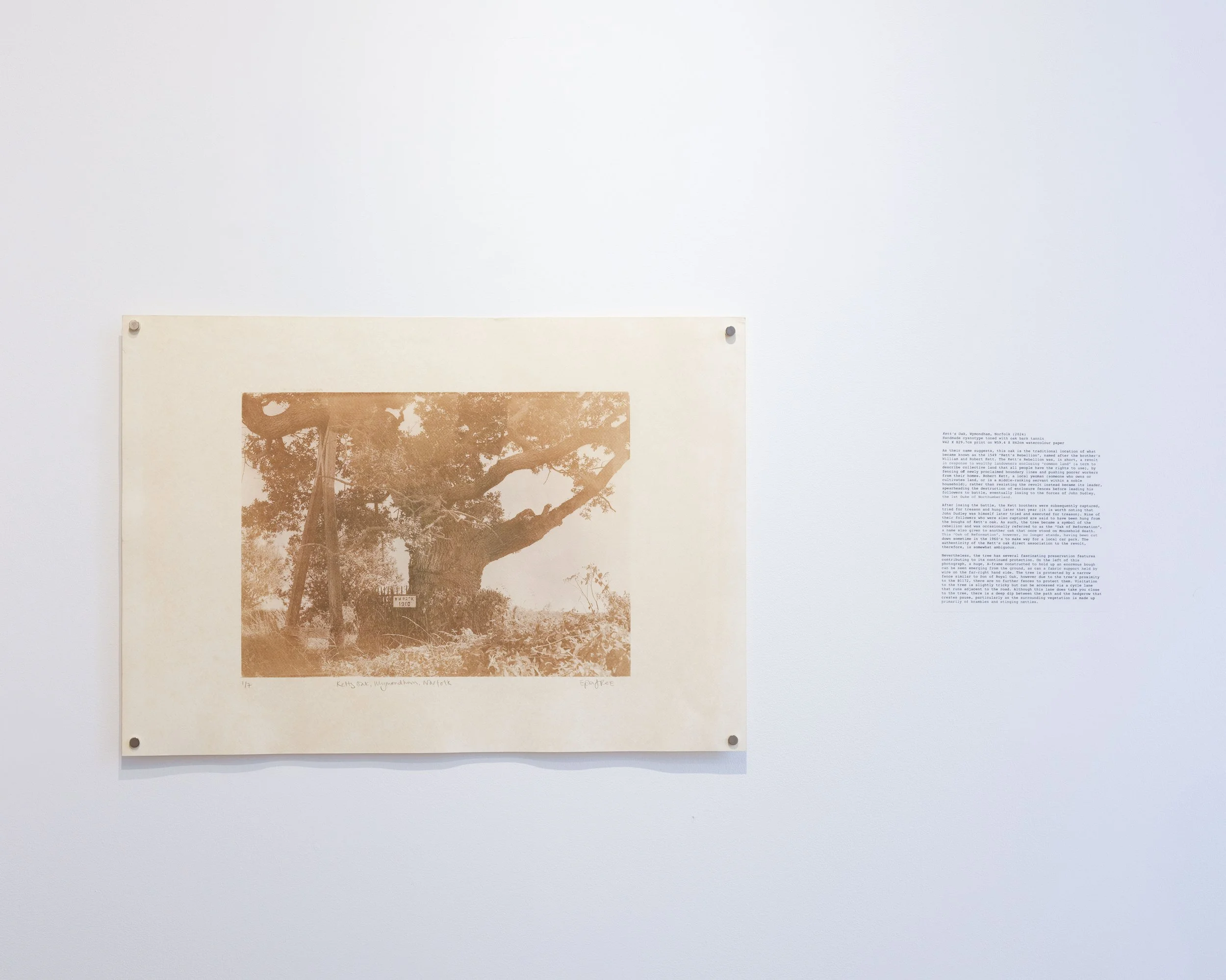
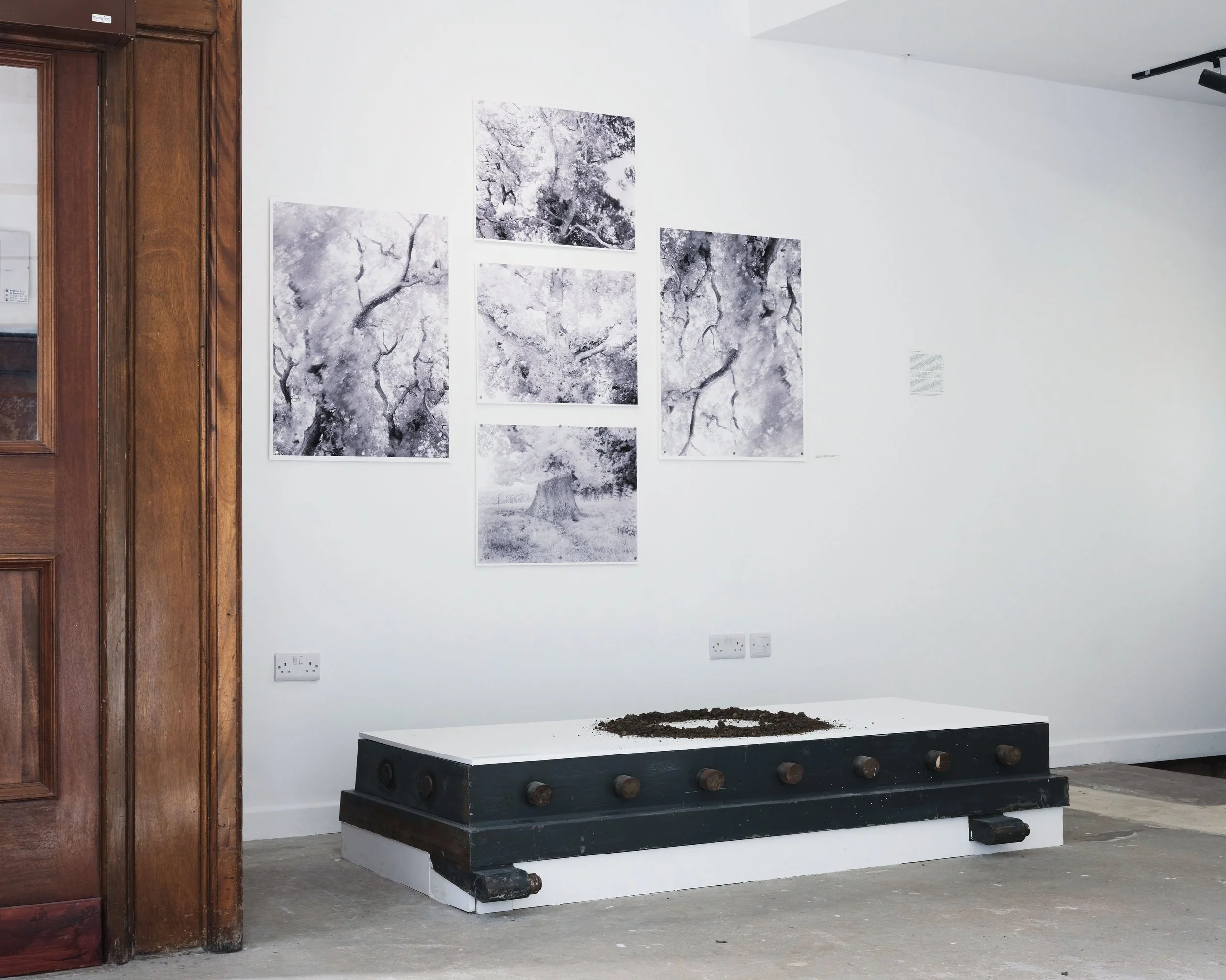
This project contains six large-format photographic prints of English heritage oak trees as part of Epha’s practice-based PhD. The prints are made using the cyanotype process in combination with oak tannin as a dye, a chemical compound found within the leaves and bark of oak leaves. In short, the project explores how plants can, through the incorporation of their organic material, become part of the process of their own representation.


Publications
Alongside Epha’s artistic practice sits their research practice, having written several peer-reviewed articles for academic journals such as Antennae: Journal of Nature in Visual Culture, and Plant Perspectives, a journal of interdisciplinary plant studies.
Their specialism, although primarily grounded in their artistic practice, currently spans photographic history and theory, the cultural history of the oak tree in England, artistic curatorial strategies, interdisciplinary and critical plant studies, queer ecology and queer theory.
-
This paper explores my practice-based research project Arboreal Encounters—a collection of tannin-toned cyanotypes made in collaboration with six heritage oak trees across England, looking at how alternative photographic methodologies can actively interact with and integrate contemporary theories of vegetal intelligence. By treating the photographic process as an explicit invitation to the trees to become part of their own representation, I consider how these interactions act as literal human-plant collaborations, offering a way to resist viewing the natural world merely as a commodity.
Citation: Roe, E. J. (2024) ‘Photographic Phytography: Towards a Photographic Re-Centring of the Oak Tree within Theory, Material and Practice’, Plant Perspectives: Journal of Historical & Contemporary Ecology, 1(1), pp. 55–72. doi:10.3197/whppp.63845494909727.
-
Written for Antennae's special "Queering Nature" issue, this essay examines the presence of an ancient oak tree in Virginia Woolf’s landmark 1928 novel Orlando: A Biography through a queer ecology lens, exploring the use of the natural world as a literary device and interconnected narrative that forms Orlando’s world.
Citation: Roe, E. J. (2024) ‘Qu(e)ercus robur: Orlando and the Oak Tree’, Antennae: The Journal of Nature in Visual Culture, (63: Queering Nature), pp. 84–92.
-
This paper was co-written with queer theorist Joe Jukes and published in Networking Knowledge: MeCCSA Journal for Postgraduate Research’s ‘Dreaming of Another Place’ issue. Drawing from our independent disciplines of queer theory and photographic practice, it examines the creative and curatorial practices, and the theoretical frameworks that structure them, in relation to Queer Constellations: Artistic Trespass and Rural Gay Histories, an art exhibition that took place at the Museum of English Rural Life (MERL) between July and September 2021.
Citation: Roe, E. J. and Jukes, J. (2023) ‘“Queer Constellations”: Reflections on Curatorial and Creative Practice at the Museum of English Rural Life’, Networking Knowledge: Journal of the MeCCSA Postgraduate Network, 16(1), pp. 3–18. doi:10.31165/nk.2023.161.
Audience Feedback
